
A contractor who asks for half the money before starting is not necessarily dishonest, but the schedule is upside down. Your leverage in a renovation is the unpaid balance, and it disappears the moment you pay ahead of the work.
We built a 2026 payment schedule from residential contracts, lender draw rules and real disputes. It is designed to be fair to a good contractor and protective when a job goes wrong.
The deposit
A reasonable deposit covers mobilisation and special-order materials, not the contractor's entire profit. Ten to 20 percent is common; some states cap it by law. Ask what the deposit buys: permits, dumpster, insurance certificate, material orders. Get a receipt and a signed contract before any money moves.
Be cautious with a request for 50 percent up front. It may signal a cash-flow problem, or it may simply be the local custom. Either way, ask for a written schedule that ties the rest of the payments to milestones. A contractor who refuses any schedule is telling you something.
Milestones, not calendar dates
Pay for completed work, not for time on the clock. A kitchen might use these milestones: demolition complete, rough electrical and plumbing inspected, drywall and paint complete, cabinets installed, countertops installed, final inspection and punch list. Each draw is released after you inspect the work and receive the required paperwork.
Define "complete" in the contract. A cabinet installation is not complete if the doors are missing or the crown is unfinished. Write the acceptance criteria next to each milestone, and keep a photo log with dates.
Retainage and the final payment
Hold back 5 to 10 percent until the punch list is complete and the final inspection passes. Retainage is normal in commercial work and increasingly common in residential contracts. It gives the contractor a reason to return for the small items that otherwise drag on for months.
Release the final payment only when you have the final inspection sign-off, the warranty documents, the equipment manuals, the lien waivers and a clean site. Keep a written punch list and photograph each item before and after. A 30-day warranty walk-through is a sensible addition for larger jobs.
Lien waivers and proof of payment
In many states, a subcontractor or supplier can place a lien on your property if they are not paid, even if you paid the general contractor. Protect yourself with conditional lien waivers at each draw and unconditional waivers when the money clears. Ask for proof that subcontractors and suppliers have been paid.
Keep a file with the contract, change orders, invoices, waivers, inspection reports and photos. If a lien appears, that file is your defence. A title company or construction attorney can review the wording before work begins, which is cheaper than resolving a lien later.
The payment schedule is not a lack of trust. It is the structure that lets trust survive a difficult job.
Materials and special orders
Some materials require a deposit: custom cabinets, windows, tile and stone. Pay the supplier directly where possible, or require the contractor to provide the supplier invoice and a receipt. Never pay a large material deposit in cash without a receipt that names the project and the supplier.
If the contractor stores materials on site, confirm insurance covers them. If they are stored at the contractor's yard, ask for proof of payment and a delivery date. A delay in a custom order is a schedule risk, not a reason to release the next draw early.
Key facts
- Deposit: 10 to 20 percent, tied to mobilisation.
- Pay at milestones, never on calendar dates.
- Retainage: 5 to 10 percent until punch list completion.
- Collect lien waivers with every draw.
- Release final payment after inspection and paperwork.
A sample schedule for a $60,000 kitchen
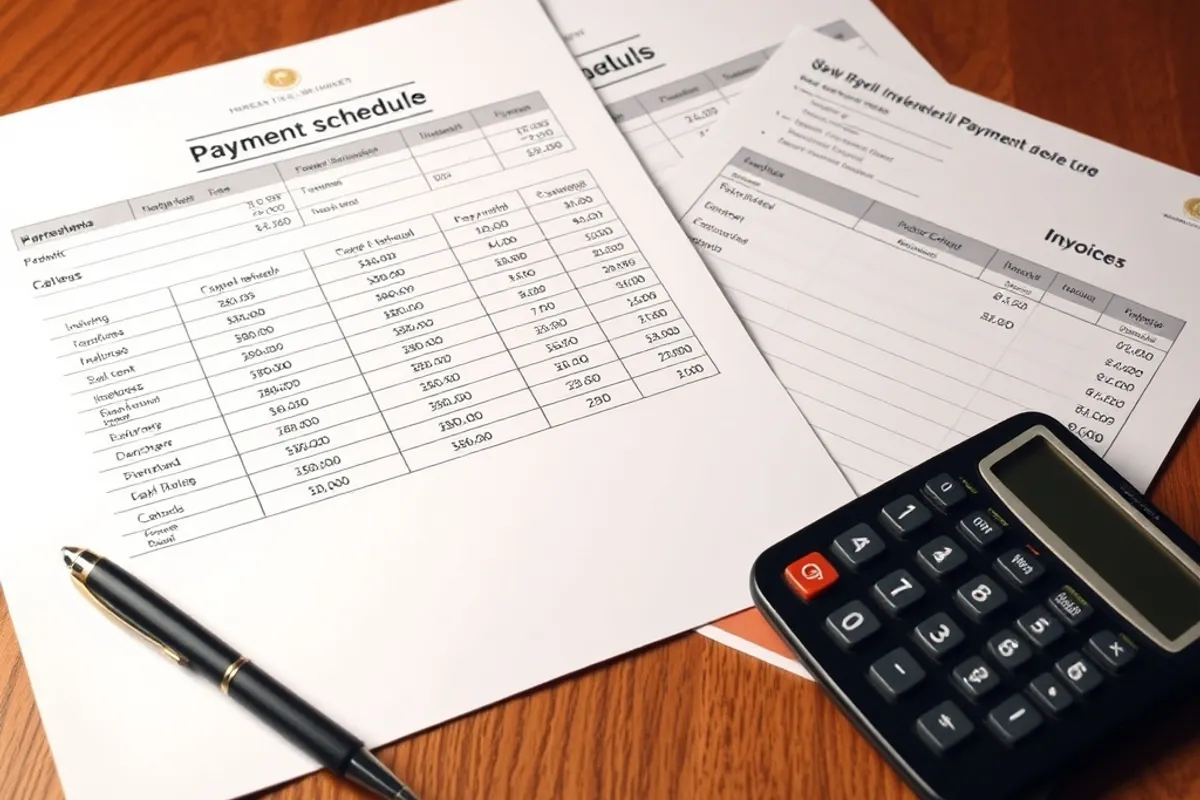
Deposit of 15 percent, or $9,000, at contract signing. Draw two of 20 percent, $12,000, after demolition and rough-in inspection. Draw three of 20 percent after drywall and paint. Draw four of 25 percent after cabinets and countertops. Draw five of 10 percent after final inspection. The final 10 percent, $6,000, is retained for 30 days after the punch list is closed.
The percentages are a starting point, not a law. Adjust them to the way the work actually flows, and make sure the total equals the contract sum. If a change order is added, revise the schedule in writing rather than folding it into the next draw.
When a payment is disputed
Do not stop paying the whole job over one disputed item. Pay the undisputed portion, withhold the disputed amount in writing, and state what would resolve it. Keep communicating through email so there is a record. If the dispute grows, a mediator is usually faster and cheaper than a lawyer.
For the change-order side of the same job, read our contractor change order guide. More hiring and contract advice is on the Contractor desk.